Glaucoma Treatment & Management

Advanced care to protect your vision from the silent thief of sight. Early detection and expert management are key to preserving your vision.

What is Glaucoma?

Glaucoma is a group of eye conditions that damage the optic nerve, often due to abnormally high pressure in the eye (intraocular pressure). This damage can lead to permanent vision loss if not treated promptly and effectively.

Often called the "silent thief of sight," glaucoma typically causes no pain and produces no symptoms until noticeable vision loss occurs. By then, the damage is irreversible. That's why regular comprehensive eye exams are crucial for early detection and treatment.

Types of Glaucoma

  • Primary Open-Angle Glaucoma: The most common form, developing gradually over time with no early warning signs.
  • Angle-Closure Glaucoma: Can occur suddenly (acute) or gradually (chronic), causing severe eye pain, headaches, and rapid vision loss.
  • Normal-Tension Glaucoma: Optic nerve damage occurs despite normal eye pressure.
  • Secondary Glaucoma: Develops as a result of other eye conditions, injuries, or medications.
  • Congenital Glaucoma: Present at birth or develops in early childhood.
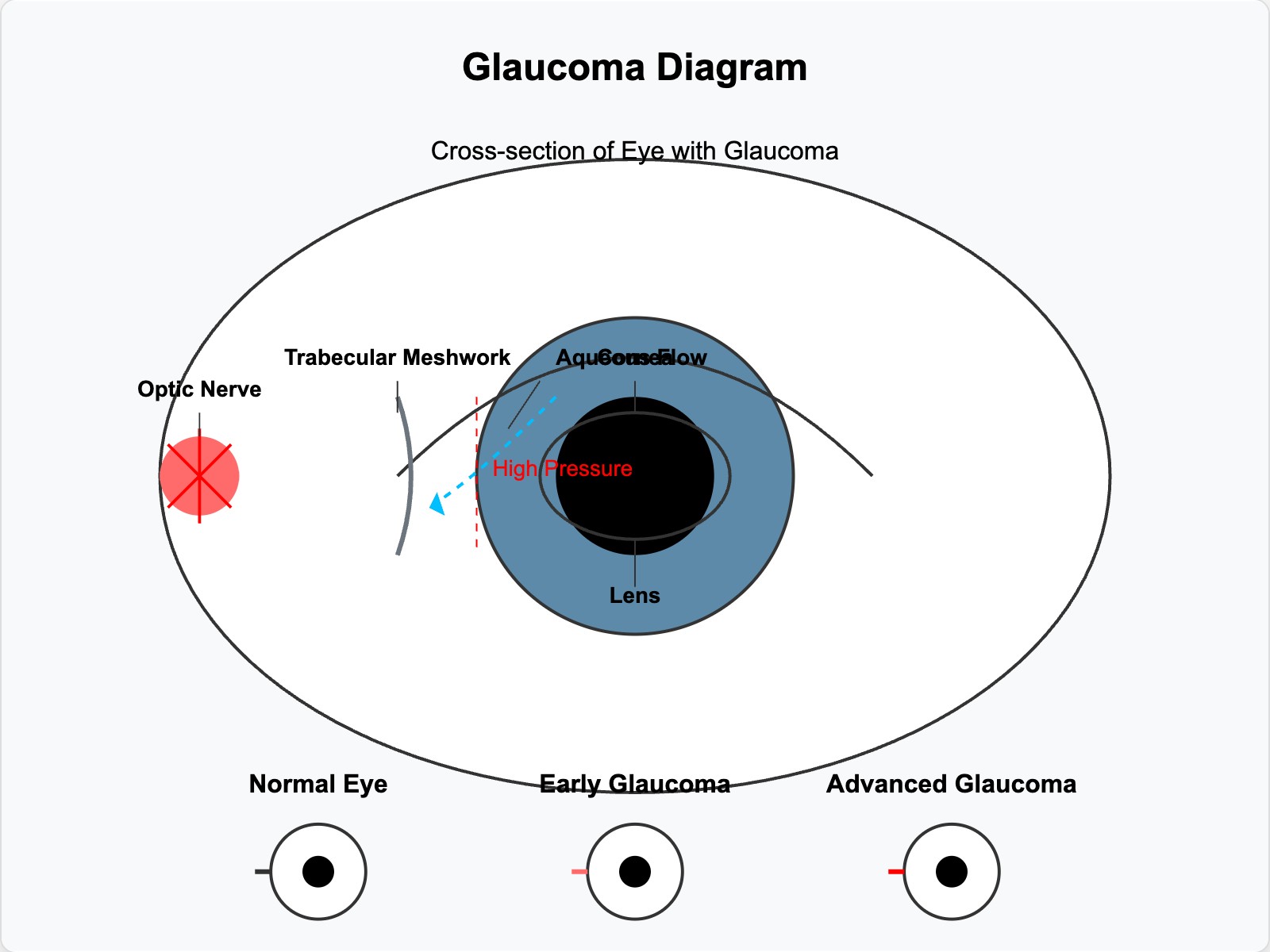
Glaucoma Diagram

Glaucoma Risk Factors

  • Age over 60 (over 40 for African Americans)
  • Family history of glaucoma
  • High intraocular pressure
  • African, Hispanic, or Asian heritage
  • Certain medical conditions (diabetes, heart disease, high blood pressure)
  • Previous eye injuries or surgeries
  • Long-term use of corticosteroid medications
  • Thin corneas
  • Extreme nearsightedness or farsightedness
Symptoms & Diagnosis

Recognizing Glaucoma Symptoms

In the early stages, glaucoma typically has no symptoms. As the disease progresses, you may notice:

  • Gradual loss of peripheral (side) vision, typically in both eyes
  • Tunnel vision in the advanced stages
  • Blurred vision
  • Difficulty adjusting to low light
  • Seeing halos around lights
  • Eye pain or redness (in acute angle-closure glaucoma)
  • Headaches
  • Nausea and vomiting (in acute cases)

If you experience any of these symptoms, especially sudden eye pain accompanied by nausea and vomiting, seek immediate medical attention as this could indicate acute angle-closure glaucoma, which is a medical emergency.

Advanced Diagnostic Technology

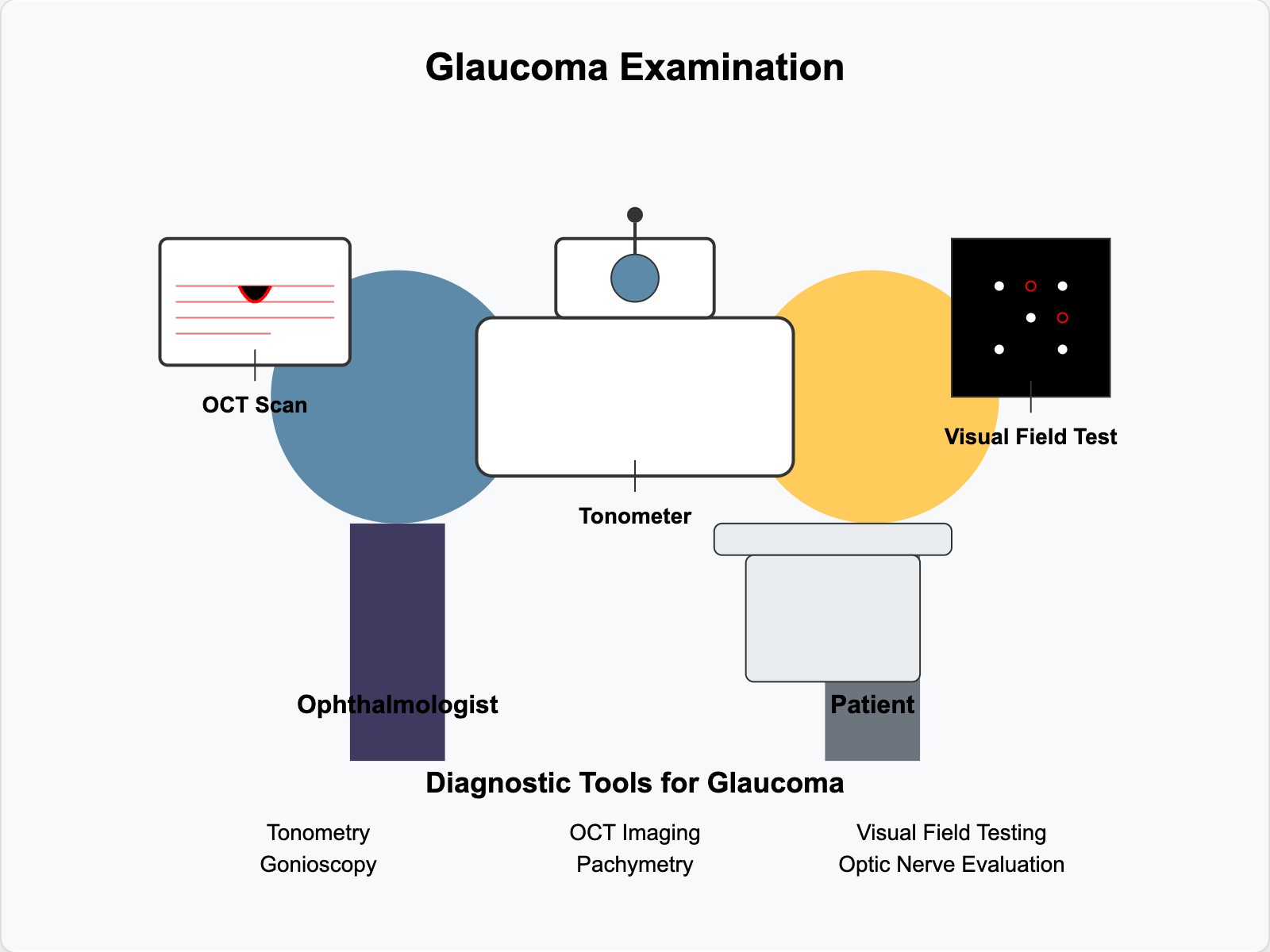
At the Eyecare Center of Orange County, we utilize state-of-the-art technology to diagnose glaucoma in its earliest stages, even before symptoms appear:

  • Tonometry: Measures intraocular pressure
  • Optical Coherence Tomography (OCT): Creates detailed images of the optic nerve and retina to detect damage
  • Visual Field Testing: Assesses peripheral vision loss
  • Gonioscopy: Examines the drainage angle of the eye
  • Pachymetry: Measures corneal thickness, an important risk factor for glaucoma
  • Retinal Nerve Fiber Layer Analysis: Evaluates the thickness of nerve fibers entering the optic nerve

Our comprehensive glaucoma evaluation goes beyond simply checking eye pressure. We analyze multiple factors to assess your risk and detect early signs of damage before vision loss occurs.

Treatment Options

While damage from glaucoma cannot be reversed, treatment can help slow or prevent further vision loss. The goal of all glaucoma treatment is to lower intraocular pressure to prevent damage to the optic nerve. Treatment options depend on the type and severity of your glaucoma.

Prescription Eye Drops

The most common initial treatment for glaucoma. These medications work by either reducing the production of fluid in the eye or increasing its outflow, thereby lowering intraocular pressure.

Different classes of eye drops include:

  • Prostaglandin analogs
  • Beta blockers
  • Alpha-adrenergic agonists
  • Carbonic anhydrase inhibitors
  • Rho kinase inhibitors
  • Combination medications

Laser Therapy

When medications alone aren't sufficient or aren't tolerated well, laser procedures may be recommended:

  • Laser Trabeculoplasty (SLT/ALT): Improves drainage of fluid from the eye
  • Laser Peripheral Iridotomy (LPI): Creates a tiny hole in the iris to improve fluid flow in angle-closure glaucoma
  • Cyclophotocoagulation: Reduces fluid production by treating the ciliary body

These procedures are typically performed in an outpatient setting and require minimal recovery time.

Surgical Interventions

For advanced or rapidly progressing glaucoma, surgical options may be necessary:

  • Trabeculectomy: Creates a new drainage channel for fluid to leave the eye
  • Glaucoma Drainage Devices: Implants that help drain fluid from the eye
  • Minimally Invasive Glaucoma Surgery (MIGS): Newer procedures with fewer risks and faster recovery
  • Canaloplasty: Enhances the eye's natural drainage system

Dr. Bonakdar works closely with top glaucoma surgeons to coordinate your care if surgical intervention becomes necessary.

Our Approach to Glaucoma Care

Glaucoma Examination

At the Eyecare Center of Orange County, we take a comprehensive, personalized approach to glaucoma management:

  • Early Detection: Our advanced diagnostic technology can identify glaucoma in its earliest stages, before vision loss occurs.
  • Individualized Treatment Plans: We develop customized treatment strategies based on your specific type of glaucoma, its severity, and your overall health.
  • Regular Monitoring: Consistent follow-up examinations allow us to track your condition and adjust treatment as needed.
  • Patient Education: We ensure you understand your condition and treatment options, empowering you to take an active role in your eye health.
  • Collaborative Care: When necessary, we work closely with glaucoma specialists and surgeons to provide seamless, comprehensive care.
  • Lifestyle Guidance: We provide advice on lifestyle modifications that can support your treatment, such as regular exercise and proper nutrition.

Our goal is not just to treat glaucoma but to preserve your vision and quality of life for years to come.

Frequently Asked Questions

Can glaucoma be cured?

Currently, there is no cure for glaucoma. However, with early detection and proper treatment, the progression of the disease can be significantly slowed or halted, preserving your vision. This is why regular eye examinations are crucial, especially if you have risk factors for glaucoma.

How often should I have my eyes checked for glaucoma?

The American Academy of Ophthalmology recommends comprehensive eye exams:

  • Every 2-4 years for ages 40-54
  • Every 1-3 years for ages 55-64
  • Every 1-2 years for ages 65 and older

However, if you have risk factors for glaucoma (family history, African American heritage, diabetes, etc.), you should have more frequent examinations as recommended by your eye doctor.

Will I go blind from glaucoma?

With early detection and proper treatment, most people with glaucoma will not go blind. However, if left untreated, glaucoma can cause significant vision loss and even blindness. This is why it's often called the "silent thief of sight" – by the time you notice vision problems, permanent damage may have already occurred.

Do I need to use eye drops for the rest of my life?

For many patients, glaucoma is a lifelong condition that requires ongoing management. If eye drops are part of your treatment plan, you may need to use them indefinitely. However, advances in laser treatments and surgical options may reduce or eliminate the need for drops in some cases. Your treatment plan may evolve over time based on how well your glaucoma is controlled and how you respond to different treatments.

Can lifestyle changes help manage glaucoma?

While lifestyle changes alone cannot treat glaucoma, certain habits may support your overall treatment plan:

  • Regular exercise (which can help lower intraocular pressure)
  • Maintaining a healthy diet rich in antioxidants
  • Avoiding smoking
  • Limiting caffeine intake
  • Staying hydrated
  • Protecting your eyes from injury
  • Managing other health conditions like diabetes and high blood pressure

Always discuss any lifestyle changes with your eye doctor as part of your comprehensive treatment plan.

Patient Testimonials

"Dr. Bonakdar detected my glaucoma during a routine eye exam before I had any symptoms. Thanks to his early diagnosis and treatment plan, my vision has remained stable for years. The staff is always helpful in explaining my condition and answering all my questions."

- Richard M., 68

"After struggling with multiple eye drops that caused irritation, Dr. Bonakdar worked with me to find a treatment regimen that effectively controls my glaucoma with minimal side effects. His patience and expertise have made managing this chronic condition much easier."

- Susan T., 59

"When I was diagnosed with glaucoma, I was terrified of losing my vision. The team at Eyecare Center of Orange County has been incredibly supportive, providing not just medical care but also the emotional support and education I needed to understand and manage my condition."

- James K., 72

Take Control of Your Glaucoma Today

Early detection and proper management are key to preserving your vision. Schedule your comprehensive glaucoma evaluation with Dr. Bonakdar.

Related Conditions

Book Your Consultation