Comprehensive management to preserve your central vision and quality of life. Early detection and expert care are essential for managing AMD effectively.
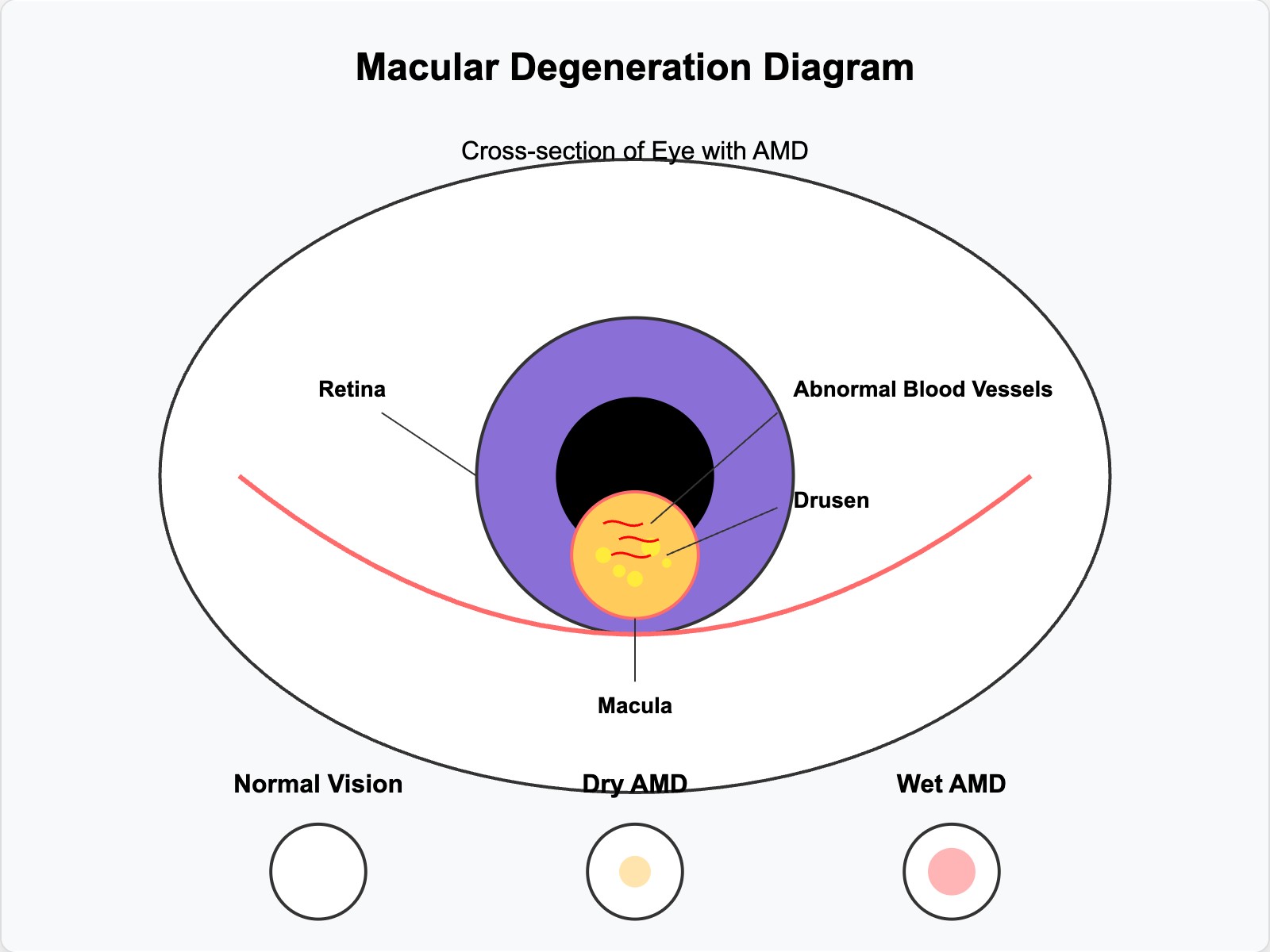
Age-related macular degeneration (AMD) is a progressive eye condition that affects the macula, the central portion of the retina responsible for sharp, central vision. The macula allows us to see fine details clearly and is essential for activities like reading, driving, and recognizing faces.
As AMD progresses, it can lead to blurred or distorted central vision, while peripheral (side) vision typically remains intact. This condition is a leading cause of vision loss in people over 50 years of age.
In the early stages, AMD may not cause noticeable symptoms. As the condition progresses, you may experience:
It's important to note that AMD affects central vision but usually does not impact peripheral vision. This means that while activities requiring detailed vision become difficult, complete blindness from AMD is rare.
If you notice any of these symptoms, especially sudden changes in your vision, contact us immediately for an evaluation.
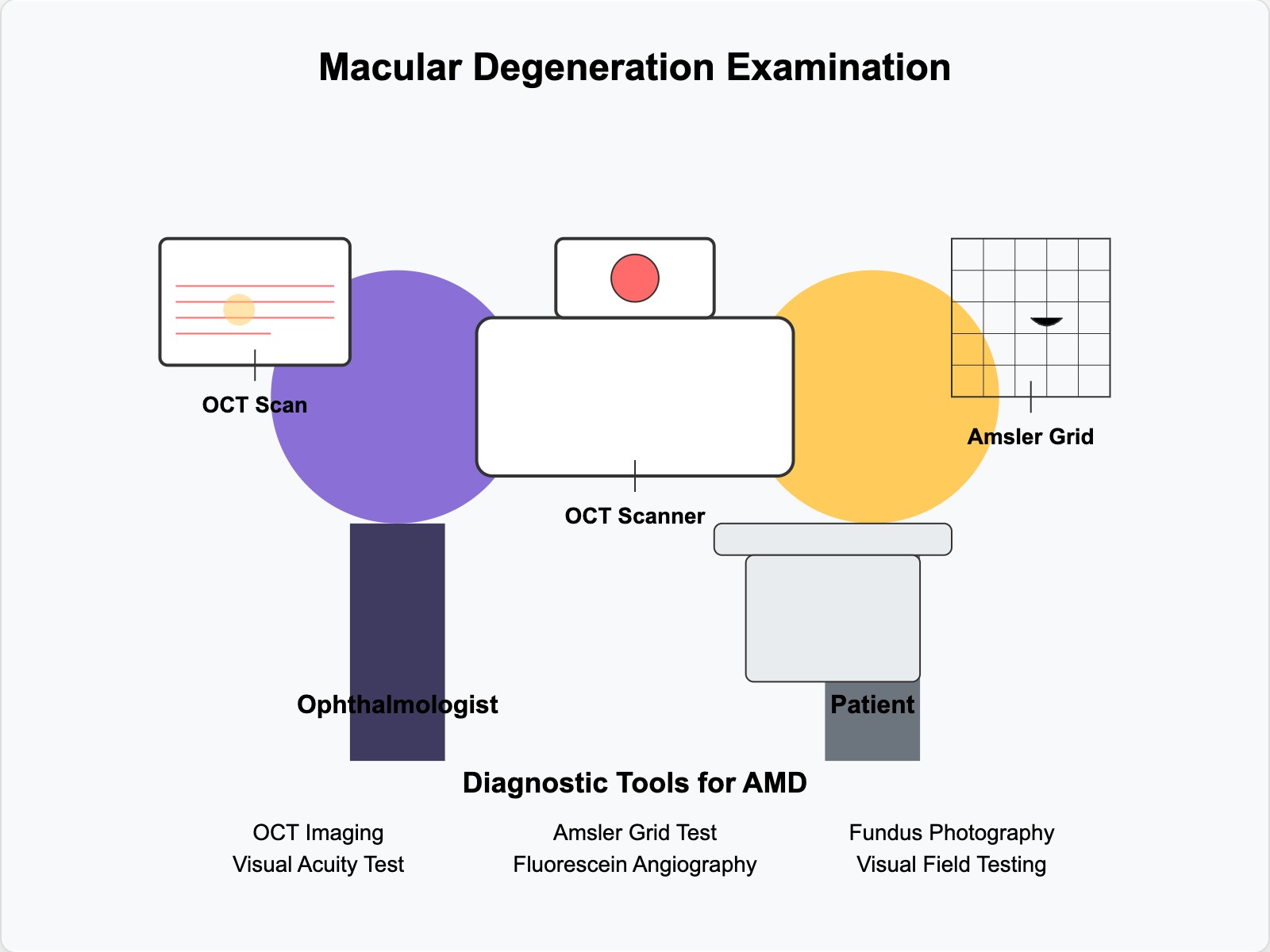
At the Eyecare Center of Orange County, we utilize state-of-the-art technology to diagnose and monitor macular degeneration:
These comprehensive tests allow us to detect AMD in its earliest stages, when treatment is most effective, and to monitor the progression of the disease over time.
While there is currently no cure for macular degeneration, various treatments can slow its progression and help manage symptoms. The appropriate treatment depends on the type and stage of AMD.
Research has shown that specific nutritional supplements can reduce the risk of AMD progression in certain patients:
Dr. Bonakdar will recommend appropriate supplements based on your specific condition and overall health.
For wet AMD, treatments focus on stopping the growth and leakage of abnormal blood vessels:
Dr. Bonakdar works closely with retina specialists to coordinate these treatments and provide comprehensive care.
For patients with significant vision loss from AMD, low vision rehabilitation can help maximize remaining vision:
Our goal is to help you maintain your quality of life and independence despite vision changes from AMD.
At the Eyecare Center of Orange County, we take a comprehensive, personalized approach to macular degeneration management:
Our goal is to preserve your vision and quality of life through early intervention, appropriate treatment, and ongoing support.
While some risk factors for AMD, such as age and genetics, cannot be changed, there are several lifestyle modifications that may help reduce your risk or slow the progression of the disease:
There is a genetic component to AMD. If you have a family history of the condition, your risk is higher. Several genes have been identified that are associated with AMD, and genetic testing is available, though not routinely recommended. If you have family members with AMD, it's especially important to have regular eye examinations and to adopt lifestyle habits that may reduce your risk.
While AMD can cause significant vision loss, it rarely leads to complete blindness. AMD affects central vision, which is needed for detailed tasks like reading and driving, but it typically does not affect peripheral (side) vision. Even with advanced AMD, most people retain some vision and can maintain independence with appropriate low vision aids and rehabilitation. Early detection and treatment are key to preserving as much vision as possible.
The American Academy of Ophthalmology recommends that adults have a comprehensive eye examination at age 40, with follow-up exams:
However, if you have risk factors for AMD (such as family history, smoking, or cardiovascular disease), or if you've already been diagnosed with AMD, you may need more frequent examinations. Dr. Bonakdar will recommend an appropriate schedule based on your individual situation.
Yes, research has shown that nutrition plays a significant role in AMD risk and progression. The Age-Related Eye Disease Studies (AREDS and AREDS2) demonstrated that a specific formulation of vitamins and minerals can reduce the risk of progression to advanced AMD by about 25% in people with intermediate AMD or advanced AMD in one eye.
Additionally, a diet rich in dark, leafy greens (which contain lutein and zeaxanthin), omega-3 fatty acids (found in fish), and colorful fruits and vegetables (high in antioxidants) appears to be protective. Conversely, diets high in processed foods, saturated fats, and refined carbohydrates may increase risk. While diet alone cannot prevent or cure AMD, it is an important part of a comprehensive approach to eye health.
Dry AMD and wet AMD are different forms of the same condition:
Dry AMD can sometimes progress to wet AMD, which is why regular monitoring is essential. Any sudden changes in vision should be reported immediately, as early treatment of wet AMD is crucial for preserving vision.
Early detection and management are key to preserving your vision with macular degeneration. Schedule your comprehensive eye examination with Dr. Bonakdar.