Comprehensive care for clearer vision. Our expert team provides thorough evaluation, surgical referrals, and personalized post-operative care.
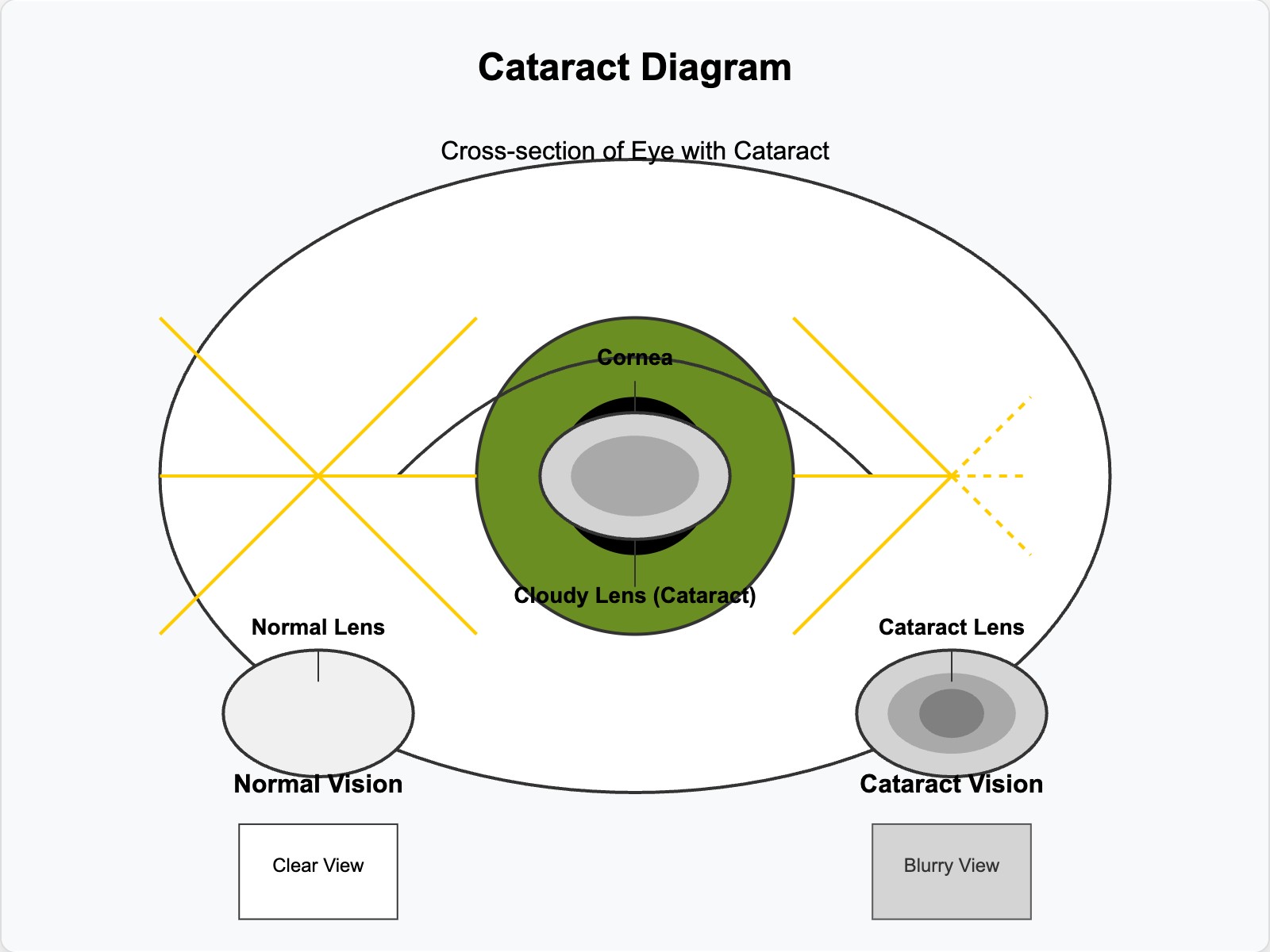
Cataracts occur when the natural lens of your eye, which is normally clear, becomes cloudy. This clouding develops when proteins in the lens break down and clump together, gradually worsening over time and affecting your vision.
Think of it like looking through a foggy or frosted window. Cataracts typically develop slowly and painlessly, often as a natural part of aging. In fact, by age 80, more than half of all Americans either have cataracts or have undergone cataract surgery.
Cataracts typically develop slowly, and you may not notice vision changes initially. As they progress, you may experience:
These symptoms can significantly impact your daily activities, making it difficult to read, drive (especially at night), or see facial expressions clearly. If you're experiencing any of these symptoms, it's important to schedule a comprehensive eye examination.
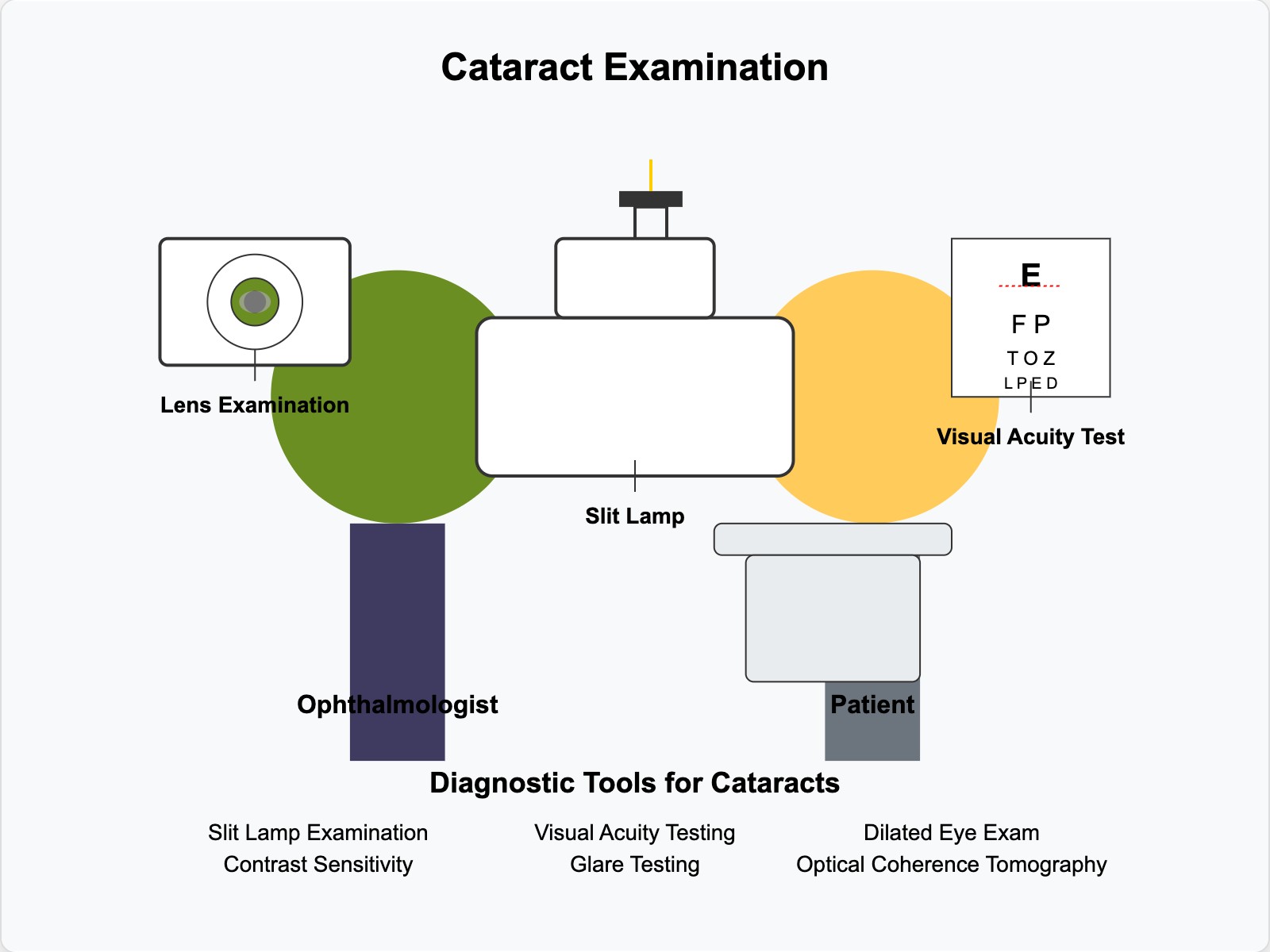
At the Eyecare Center of Orange County, our cataract evaluation includes:
These comprehensive tests help us determine the extent of your cataracts and how they're affecting your vision and daily life. This information is crucial for developing an appropriate treatment plan and determining when surgery might be necessary.
In the early stages of cataracts, vision changes can often be managed with updated eyeglass prescriptions and other strategies. However, when cataracts significantly affect your quality of life, surgery is the only effective treatment. Modern cataract surgery is one of the most common and successful surgical procedures performed today.
When cataracts are in their early stages, we can help you manage vision changes with:
These approaches can help you maintain good functional vision while monitoring the progression of your cataracts.
When cataracts significantly impact your vision and daily activities, surgery becomes the recommended treatment. Modern cataract surgery involves:
Dr. Bonakdar works closely with top cataract surgeons in Orange County to ensure you receive the highest quality surgical care.
One of the most important decisions in cataract surgery is selecting the right type of intraocular lens (IOL). Options include:
We'll help you understand these options and recommend the best choice based on your lifestyle, visual needs, and eye health.
At the Eyecare Center of Orange County, we provide comprehensive cataract co-management services, working closely with skilled surgeons to ensure seamless care throughout your cataract journey:
Our co-management approach ensures you receive expert care at every stage of the cataract treatment process, from initial diagnosis through post-surgical recovery and beyond.
Common symptoms include blurry vision, increased glare sensitivity, difficulty seeing at night, fading colors, and frequent changes in eyeglass prescriptions. However, the only way to definitively diagnose cataracts is through a comprehensive eye examination. During your exam, Dr. Bonakdar will dilate your pupils and use specialized equipment to examine your lens for signs of cataracts.
Cataract surgery should be considered when your cataracts begin to interfere with your daily activities and quality of life. This might include difficulty driving (especially at night), reading, watching television, or recognizing faces. The decision for surgery is highly individual and depends on how your cataracts affect your specific visual needs and lifestyle. During your consultation, we'll help you determine if the time is right for surgery.
Modern cataract surgery is typically performed using a technique called phacoemulsification. After numbing your eye with drops or medication, the surgeon makes a tiny incision in the cornea, inserts a small probe that emits ultrasound waves to break up the cloudy lens, and then removes the lens fragments by suction. An artificial intraocular lens (IOL) is then inserted to replace your natural lens. The procedure usually takes less than 30 minutes and is performed on an outpatient basis, meaning you can go home the same day.
Whether you'll need glasses after cataract surgery depends largely on the type of intraocular lens (IOL) you choose. Traditional monofocal IOLs typically provide clear vision at one distance (usually far), meaning you'll likely need glasses for other distances (like reading). Premium IOLs, such as multifocal or accommodating lenses, can reduce or eliminate the need for glasses by providing clear vision at multiple distances. However, even with premium IOLs, some patients may still need glasses for certain activities or in challenging lighting conditions.
Most patients notice improved vision within a few days of surgery, with continued improvement over the following weeks. Typical recovery milestones include:
During recovery, you'll use prescribed eye drops to prevent infection and reduce inflammation. You'll also need to avoid rubbing your eye, heavy lifting, and activities that might expose your eye to water or dust. We'll provide detailed post-operative instructions and monitor your healing through follow-up appointments.
Don't let cataracts diminish your quality of life. Schedule your comprehensive cataract evaluation with Dr. Bonakdar today.